How Can You Receive Ashes After Cremation? Understanding Your Options
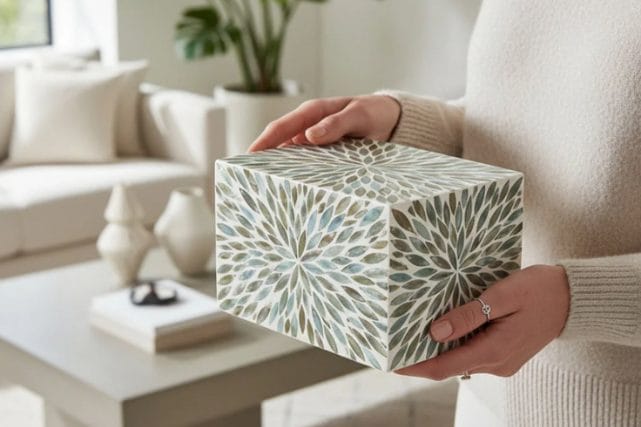
After cremation, one of the most personal decisions a family makes is how they want to receive ashes after cremation and what option feels right for them.
Families often want to understand their options for how to receive ashes after cremation, including traditional urns, keepsakes, scattering, mailing, or taking time before choosing anything permanent.
There is no one right answer. What matters most is choosing the option that feels meaningful, practical, and comfortable for your family.
You Have More Than One Option
How to Receive Ashes After Cremation
In most cases, cremated remains are placed in a secure bag and then placed inside a container chosen by the family. If no selection has been made yet, the ashes are typically returned in a simple temporary container until a permanent decision is made.
From there, families can choose what feels most meaningful to them. Some prefer a single urn to keep at home, while others may divide the ashes among family members, place a small portion in jewelry, or plan for scattering at a later time. There are also options for shipping or transporting ashes if family members live in different locations.
Families have several ways to receive ashes after cremation, and each option offers a different way to honor and remember their loved one.
There is no one “right” way to receive ashes. The choice often depends on personal preferences, family dynamics, cultural traditions, and what feels most comforting during a difficult time.
Understanding these options ahead of time can help families feel more prepared and less overwhelmed when the moment comes to decide.
Receiving Ashes in a Temporary Container
One of the most common ways families receive ashes is in a temporary container.
This container is typically a simple, durable box—often made of cardboard or basic plastic—that securely holds the cremated remains. Inside, the ashes are placed in a sealed plastic bag to ensure they are protected and handled with care.
Choosing a temporary container can be especially helpful when:
- You’re not ready to make a permanent decision
- Family members need time to discuss options
- You plan to scatter the ashes later
- You’re considering keepsake urns or jewelry
- You want to explore memorial products at your own pace
There is no pressure to choose an urn immediately. A temporary container gives families the space to make thoughtful decisions without feeling rushed during an already emotional time.
For many families, this step provides a sense of relief—knowing their loved one is safely returned to them while they take the time they need to decide what comes next.
Receiving Ashes in a Permanent Urn
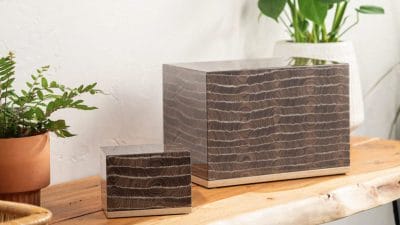
Receiving ashes in a permanent urn is one of the most traditional and widely chosen options.
A permanent urn is selected by the family ahead of time (or shortly after cremation), and the cremated remains are placed inside before being returned. These urns are designed to be both secure and meaningful, often reflecting the personality, style, or wishes of a loved one.
Urns come in a wide range of materials and designs, including:
- Wood
- Metal
- Marble or stone
- Ceramic
- Glass
- Biodegradable materials
Families may choose a permanent urn when they plan to:
- Keep their loved one at home
- Place the urn in a columbarium
- Bury the urn
- Include it in a memorial service or celebration of life
A permanent urn is more than a container—it becomes a lasting place of remembrance, offering families a tangible connection to their loved one and a space to honor their memory in a way that feels right to them.
For many, a permanent urn becomes a lasting place of remembrance—a physical connection that can bring comfort over time. Some families prefer a simple, understated design, while others choose something more decorative or personalized.
There is no right or wrong choice. What matters most is selecting something that feels meaningful and appropriate for how you want to honor your loved one.
A Lasting Place of Remembrance
Dividing Ashes Among Family Members
Many families choose to divide ashes among loved ones, allowing each person to keep a meaningful connection in their own way.
This option is more common than many people expect. Cremated remains can be carefully portioned into multiple containers, such as a primary urn, keepsake urns, or cremation jewelry.
Dividing ashes may be a good choice when:
- Multiple family members want to feel connected
- Relatives live in different locations
- Each person prefers a different type of memorial
- A portion will be scattered while some is kept
There is no standard way to divide ashes. Some families keep most of the ashes in one main urn while sharing smaller portions, while others divide them more evenly among close family members.
What matters most is open communication and choosing an approach that feels respectful and meaningful to everyone involved.
Receiving Ashes in Keepsake Urns
Keepsake urns are smaller urns designed to hold a small portion of ashes rather than the full amount.
They are often used when families choose to divide ashes among loved ones or when they want to keep a portion while using the rest for scattering, burial, or placement in a larger urn.
Keepsake urns may be a meaningful option for:
- Children, siblings, or close relatives
- Families who want multiple memorial pieces
- Those who prefer something small and personal
- Sharing ashes while keeping a primary urn
These urns come in many styles and materials, just like full-size urns, but are much smaller in size. Some are simple and understated, while others are more decorative or personalized.
For many families, keepsake urns offer a quiet sense of comfort—allowing each person to hold onto a small, meaningful part of their loved one in a way that feels personal to them.
Receiving Ashes in Cremation Jewelry
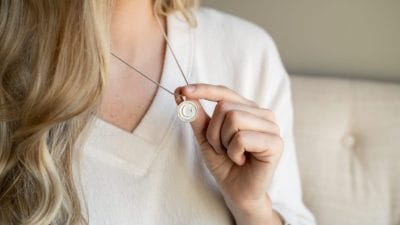
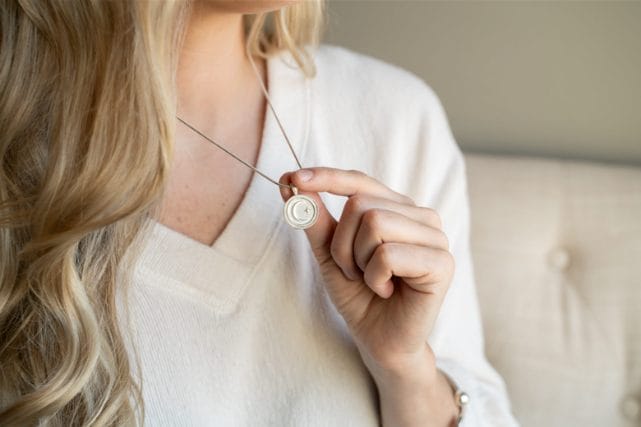
Cremation jewelry offers a very personal way to receive a small portion of ashes.
These pieces are designed with a discreet compartment that can hold a tiny amount of cremated remains, allowing someone to keep their loved one close in a private and meaningful way. Common types include necklaces, pendants, bracelets, rings, and charms.
Cremation jewelry may be a good option for:
- Someone who wants a close, personal connection
- Families sharing ashes in smaller portions
- Those who prefer something subtle and wearable
- Keeping a memory close throughout daily life
Most pieces are securely sealed once the ashes are placed inside, either by the family or by a professional, depending on the design.
Cremation jewelry is often chosen alongside other options, such as a main urn or keepsake urns. While it holds only a small amount of ashes, for many people, it carries deep emotional meaning and provides comfort in a quiet, personal way.
Receiving Ashes in a Scattering Urn
Some families choose to receive their loved one’s ashes in a scattering urn, especially when they plan to scatter the ashes in a meaningful place.
A scattering urn is designed to make the process more controlled and dignified. These urns are typically lightweight and easy to open, allowing ashes to be released gradually rather than all at once. This can be especially helpful during a ceremony or when multiple family members are involved.
There are different types of scattering urns available, including:
- Urns designed for land scattering
- Water urns that float and dissolve naturally
- Biodegradable options for eco-friendly memorials
A scattering urn helps turn a simple act into a meaningful moment—allowing families to release ashes with care, intention, and respect.
Receiving ashes in a scattering urn may be a good choice when:
- You are planning a scattering ceremony
- You want a more controlled and respectful process
- You prefer a nature-based or eco-friendly option
- The ashes will not be kept long-term
In Houston, ashes may be scattered in certain locations, including uninhabited public land, waterways, or private property with permission. Some families choose locations that held special meaning to their loved one, such as a favorite beach, park, or outdoor space.
A scattering urn can help make that moment feel more intentional—creating a meaningful and peaceful way to say goodbye.
Receiving Ashes by Mail
In some situations, families may choose to have their loved one’s ashes mailed to them.
This is often helpful when family members live in different cities or states, or when the cremation takes place in a different location than where the ashes will be kept or scattered.
Cremated remains cannot be shipped through just any carrier. In the United States, ashes must be mailed using USPS Priority Mail Express, which is specifically approved for shipping cremated remains. Special packaging and labeling are required to ensure the ashes are transported safely and respectfully.
Receiving ashes by mail may be a good option when:
- Family members are out of town or unable to travel
- Ashes need to be sent to multiple locations
- The final resting place is in another state
- Travel arrangements would be difficult or delayed
Before choosing this option, it’s important to speak with your cremation provider. They can help coordinate the process, ensure all guidelines are followed, and provide peace of mind that your loved one’s remains will arrive safely.
For many families, this option offers both convenience and reassurance—especially when distance makes in-person pickup challenging.
Traveling With Ashes
Some families choose to personally travel with their loved one’s ashes, whether by car or by airplane.
This option is often chosen when the ashes will be taken to a meaningful location, returned to a hometown, or brought to a place for scattering or a memorial service.
Traveling by car is generally straightforward, but air travel requires a few additional considerations. The Transportation Security Administration (TSA) allows cremated remains in both carry-on and checked baggage, but the container must be able to pass through X-ray screening. If the container cannot be clearly scanned, it may not be allowed through security.
If you plan to fly with ashes, it’s helpful to:
- Use a TSA-friendly container (such as wood or plastic)
- Keep the ashes in your carry-on rather than checked luggage
- Bring documentation from the cremation provider
- Check airline policies in advance
Traveling with ashes can feel emotional, but many families find comfort in personally carrying their loved one to a final resting place or meaningful destination.
Taking a few simple steps ahead of time can help ensure the process goes smoothly, allowing you to focus on honoring your loved one along the way.
Combining Options to Receive Ashes After Cremation
Families do not have to choose just one way to receive ashes.
In fact, many families find comfort in combining several options to meet different needs, preferences, and traditions. This approach allows each person to honor their loved one in a way that feels most meaningful to them.
Some common combinations include:
- A primary urn for the home or burial
- Keepsake urns for children or close family members
- Cremation jewelry for a spouse or loved one
- A portion set aside for scattering at a later time
- A biodegradable urn for a future memorial
This flexibility can be especially helpful when families are spread out geographically or when multiple people want a personal connection.
There is no rule that everything must be decided at once. Many families begin with a temporary container, then gradually choose additional options over time.
Taking a combined approach allows space for both shared remembrance and individual grieving—giving each person a way to stay connected in a way that feels right to them.
Questions to Ask Before Choosing
Before deciding how to receive your loved one’s ashes, it can help to pause and think through a few important questions.
These decisions don’t have to be rushed, and taking a little time can help you choose an option that feels right for everyone involved.
If you’re still unsure how to receive ashes after cremation, asking a few simple questions can help guide your decision.
- Do we want to keep all of the ashes together or share them?
- Does more than one family member want a portion?
- Will the ashes be kept, buried, or scattered?
- Are we planning a memorial or scattering ceremony later?
- Do we want something traditional, or something more personal?
- Will anyone need ashes shipped or transported?
- Are we ready to decide now, or do we need more time?
Every family is different, and there is no perfect answer to these questions. The goal is simply to help guide the conversation and make the process feel a little more manageable.
Taking things one step at a time can make a meaningful difference during a difficult moment.
Final Thoughts: You Have More Options Than You May Realize
Deciding how to receive your loved one’s ashes is a deeply personal choice, and it’s one that doesn’t have to be made all at once.
Many families are surprised to learn just how many options are available—from temporary containers and traditional urns to keepsakes, jewelry, scattering, and even sharing portions among loved ones. There is flexibility in the process, and it’s okay to take the time you need to decide what feels right.
What matters most is choosing something that brings comfort, reflects your loved one, and supports how your family wants to remember them.
You don’t have to have all the answers right away. With the right information and a little time, families can make thoughtful decisions that feel meaningful both now and in the years to come.